Looking for an app when you have ADHD quickly produces a list of names, each presented as the solution. Reviews contradict each other, and for good reason: these tools aren't tackling the same problem.
Before comparing names, it's worth comparing families.
What the medical framing says, and what it doesn't
France's national health authority describes adult ADHD as a combination of inattention, hyperactivity and impulsivity symptoms, frequently alongside other conditions, and has begun dedicated work on identification, diagnosis and care in adults.
No app falls inside that framing. An organization tool diagnoses nothing, treats nothing, and replaces no form of support. What it can do is more modest and real: reduce the share of organizing that rests on memory.
That's the yardstick to compare them by, not their promises.
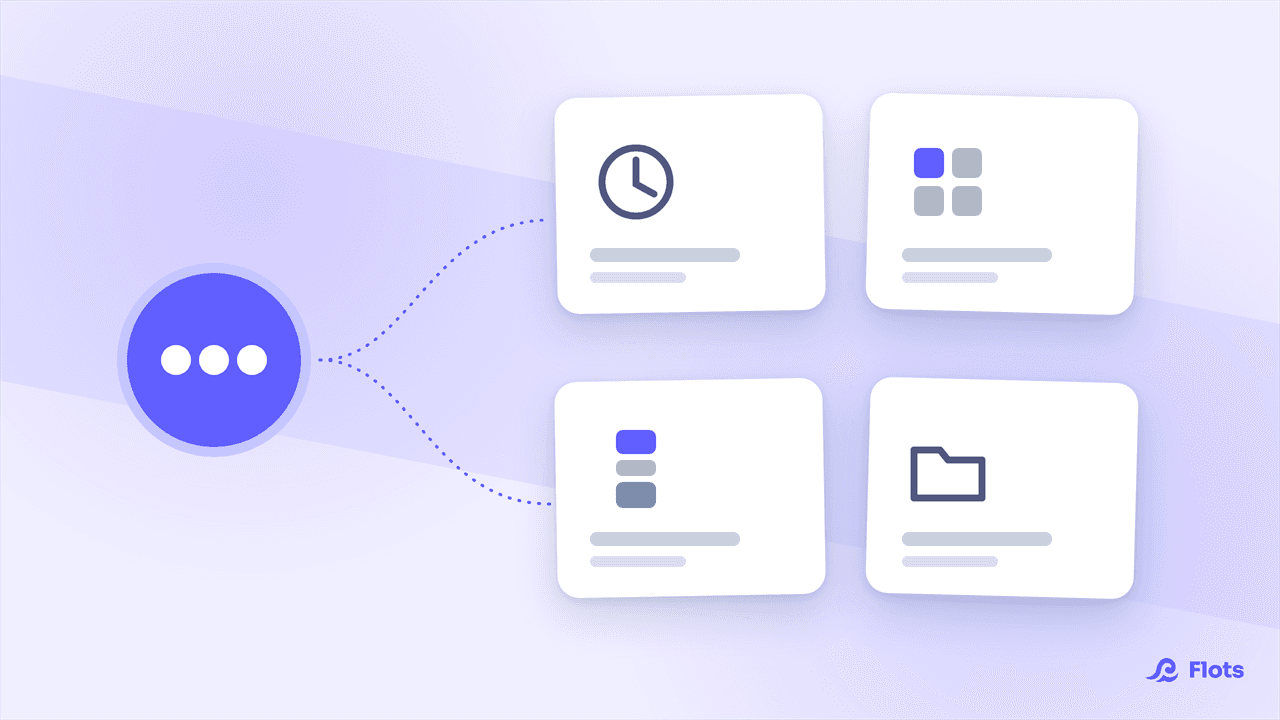
The four families of apps
Visual timers and planners. They render time as space: a bar draining down, a day in colored blocks. Useful when the problem is sensing duration. Limited as soon as there's a real volume of tasks to handle.
Classic task managers. Fast to capture into, effective on the list itself. Their weak point is time: a list doesn't say what the day can hold, so it grows without limit and becomes discouraging.
Routine and habit apps. Built around daily repetition and streaks you don't want to break. They suit rituals, much less so one-off dated commitments.
All-in-one tools. Tasks, calendar and notes together. They remove the coordination between several apps, at the cost of an interface that can feel busier.
The grid that decides
| What's blocking | The right family | The trap to avoid |
|---|---|---|
| I don't notice time passing | Visual timer or planner | A tool that handles time but not tasks |
| I forget what I have to do | Task manager | A list without dates, growing indefinitely |
| I write things down but never return | Tool with per-task reminders | Global notifications, quickly ignored |
| Recurring things slip past me | Automatic recurrence | Recreating the task by hand each time |
| I juggle three apps | All-in-one tool | Adding a fourth tool to connect the three |
The criterion comparisons forget
Almost every ranking scores feature richness. That's the wrong indicator.
What decides whether an app is still open a month from now is how many decisions it takes to put something into it. If creating a task means choosing a project, a category, a priority and a due date, the effort of capturing adds to the effort of the task. At that precise moment, you give up and remember instead. The tool has solved nothing.
A suitable app is one where putting something down costs less than holding on to it. That criterion eliminates more candidates than every comparison table combined.
Where Flots sits
Flots belongs to the last family, without claiming any medical orientation. The useful choice here is lightness at the entry point: a title is enough to create a task, everything else is optional and can be added later.
Reminders are switched on task by task, so you're alerted at the right moment without watching your list. Recurrence is set once. The calendar is built in and synced with Google Calendar, which avoids keeping two calendars. Notes take the rest, with tasks pulled out of the text, and a voice note records the memo when writing isn't possible.
On time itself, the Planning view shows dated tasks next to those still waiting for a slot. That's what lists most often lack: seeing that Tuesday is already full before adding three hours of work to it.
Flots offers no visual timer. If that's your main block, a dedicated app remains more relevant on that specific point.
The one-week test
Install a single app. Use it for seven days on your real commitments, not on a trial list.
Three questions at the end of the week. Did you write things down as they happened, or reconstruct them afterwards? Did the app alert you in time, at least once? Did you reopen it on day seven without forcing yourself?
Three yeses, that's the one. Two nos, switch, and don't try to be more disciplined about it.
The label an app puts on itself matters less than what it asks of you every day. The right tool is the one that gets out of the way.
Try an organization that asks nothing of your memory.
A task in one title, per-task reminders, the week's workload visible. Free for a year.