The meeting went well, everybody agreed, and three days later nobody knows who was supposed to do what. What failed is the trace you kept of it.
Why the single note-taker does not work
It is the default format, and it creates two problems that feed each other.
The person who writes does not really take part. They are writing down the previous sentence while the next one is being said, and they decide on their own what deserves to be kept. Their own contribution to the discussion suffers.
The others, meanwhile, check out. Since somebody is taking notes, nobody listens with the attention of the person who will have to report back. The minutes that land the next day then contain surprises, and the corrections spill into a message thread.
The protocol: split the note-taking before you start
Two minutes at the start of the meeting are enough to frame everything else.
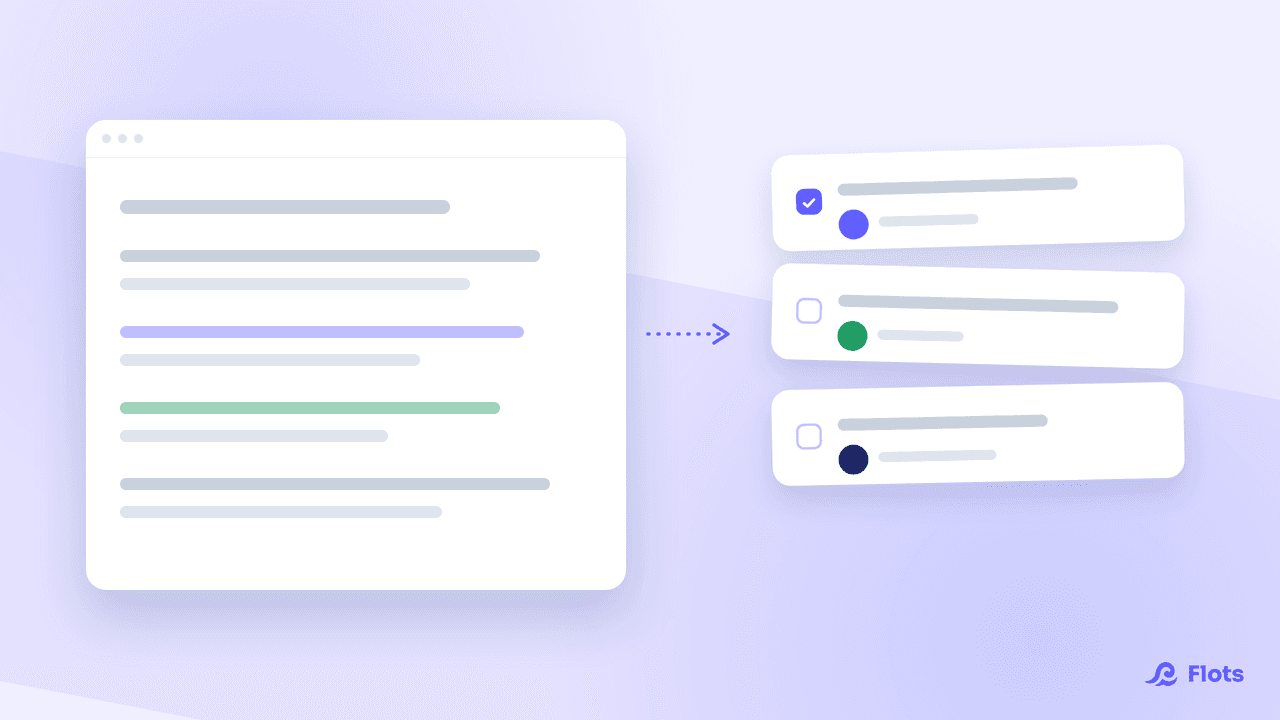
Open a shared note and lay out the agenda as headings, one section per topic. Assign each section to someone who is not presenting it: you take better notes on what you listen to than on what you present.
Everyone writes in their own section, at the same time. Live collaborative editing makes that possible with no conflict and no turn-taking: contributions merge together as you type. How it works is covered in collaborate live on a Flots note.
What to write down in a meeting, and what to let go
The temptation is to record everything. That is a mistake, and it makes the note unusable.
| Always write down | Leave out |
|---|---|
| The decisions taken, as they were worded | The blow-by-blow of the discussion |
| The actions, with an owner and a date | The arguments ruled out in the room |
| The points left open | The digressions |
| The figures and commitments quoted | The successive rewordings |
A useful meeting note often fits in fifteen lines. Three pages of minutes never get read back, so they only serve the person who wrote them.

An action with no name and no date does not exist
“We’ll look into it” is not an action. “Marc sends the quote before Thursday” is one.
The last five minutes are worth the whole meeting
It is the most profitable moment of the meeting, and the first one sacrificed when you run over.
Read the actions you wrote down out loud. For each one, check three things: somebody is named, a date is set, and the person named agrees. An action nobody reacts to has not been assigned.
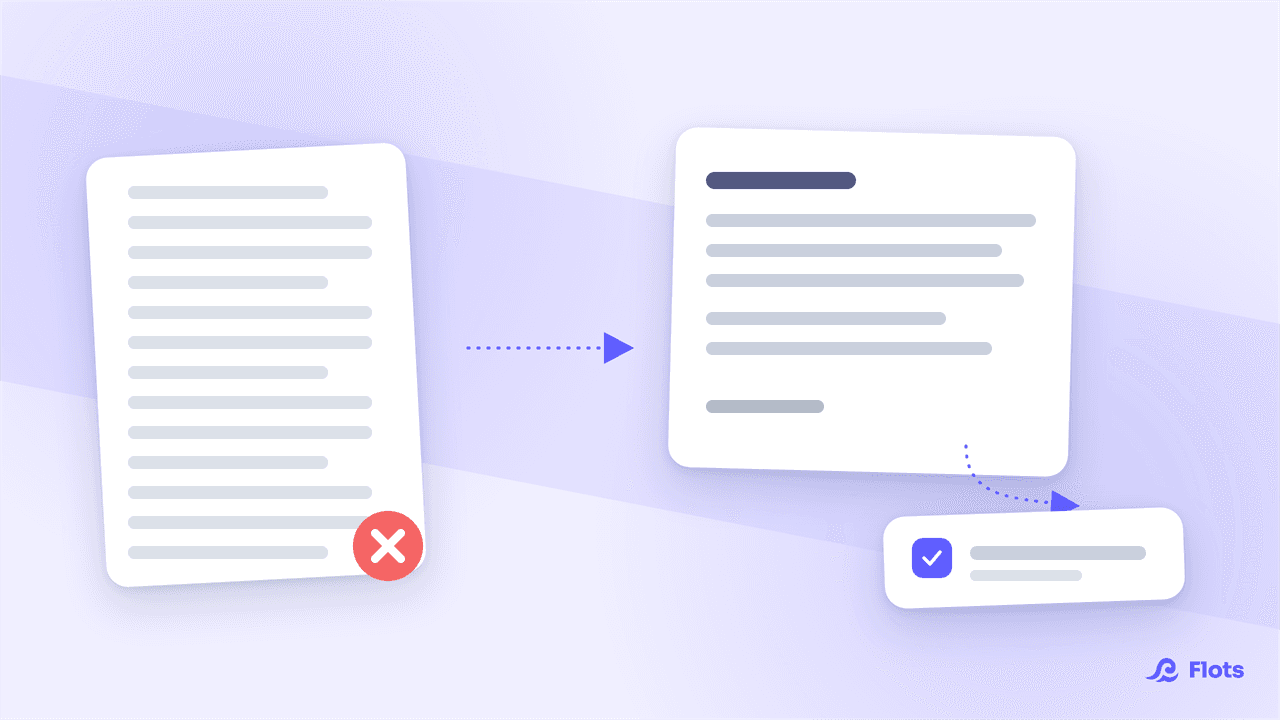
Turn them into tasks right away, while people are still in the room. In Flots, extracting tasks from a note saves the retyping, and with it the actions that get lost when you switch tools.
Afterwards: do not write up minutes
For most internal meetings, formal minutes are wasted work.
The shared note is already written, and already available to the people who need to read it. Reworking it into another format adds a delay and a source of divergence.
Attach the note to the relevant project instead. It stays where people will look for it, next to the tasks it produced, and not at the bottom of an inbox.
Keep formal minutes for the cases that really call for them: a meeting that commits a client or a partner, or one that has to leave a trace you can be held to.
The case of recurring meetings
For a weekly check-in, keep one note per occurrence rather than one never-ending note.
You can compare one week with the next, and the unfinished actions jump out instead of getting diluted in a document that keeps growing. Those short notes are also the raw material for a weekly review.
If your meetings often drift towards a diagram rather than a text, whiteboards are shared the same way.
The meeting note, finished when the meeting is.