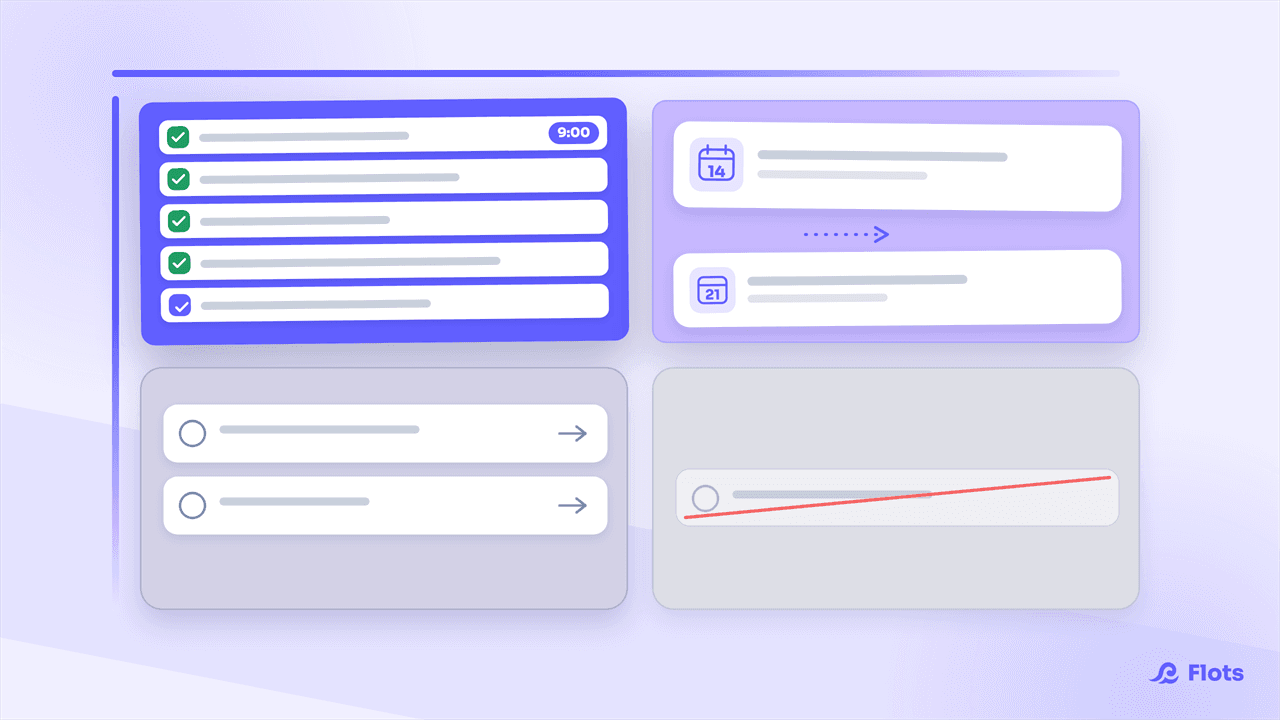
A twenty-line list doesn't tell you where to start. In the morning, you read it over, pick off an easy task, then another, and by 6pm the two things that really mattered haven't moved. The Ivy Lee method fixes this with an almost blunt constraint: six tasks at most, decided the night before, done in order.
Where does the Ivy Lee method come from?
Ivy Lee is known as one of the pioneers of public relations in the United States in the early 20th century. The method that bears his name is tied to a story told everywhere: in 1918, Charles M. Schwab, head of Bethlehem Steel, supposedly asked him how to make his executives more effective. Lee reportedly asked for fifteen minutes with each of them, free of charge, leaving Schwab to pay whatever the result was worth. Three months later, Schwab is said to have sent him a check for $25,000.
James Clear popularized this version. It deserves a grain of salt, though: Fortune presents it as the legend surrounding the method, and there's no clear primary record of the amount, the exact date or the dialogue. Keep the method, leave the check.
The 5 steps of the method
The routine fits in a few lines, as James Clear sums it up:
- At the end of the day, write down the six most important things to do tomorrow. Not one more.
- Rank them by real importance, from 1 to 6.
- The next day, focus on the first one until it's done. Only then move on to the second.
- At the end of the day, anything unfinished goes onto the new list of six for the following day.
- Repeat every working day.
No software required: a scrap of paper was enough in 1918, and it still is.
Why such a short list works
The cap forces you to choose. With twenty lines, everything has a place and nothing gets sacrificed. With six, you have to decide what won't happen tomorrow. It's uncomfortable, and it's exactly the prioritization work most lists let you avoid.
In the morning, the decision is already made. You don't open your day wondering where to start: task no. 1 is waiting. The friction of getting started, that moment when you reread your list three times before diving in, largely goes away.
One task at a time. The strict order stops you from jumping from one topic to another. Your attention stays on the same task until it's done.
Writing the plan clears your head. A study by Masicampo and Baumeister (Journal of Personality and Social Psychology, 2011) showed that unfinished goals trigger intrusive thoughts, and that simply making a specific plan to deal with them is enough to reduce those intrusions, as Psychology Today sums it up. Writing down your six tasks in the evening means closing the day without taking the list to bed with you.
The limits of the Ivy Lee method
It wasn't designed for a job where interruptions run the day. If your work is answering requests that come in nonstop (support, front desk, emergency handling), task no. 1 is likely to get knocked aside before 10am. In that case, keep the list of six for the time that's truly yours.
Six tasks of very different sizes don't carry the same weight. "Write the annual report" and "Confirm the meeting" shouldn't each take up a sixth of the day. Break big topics down into one concrete step you can finish within the day.
Finally, the method doesn't tell you how to pick the six. It assumes you already know what matters. If everything feels like a priority, the sorting has to come first.
Ivy Lee, Eisenhower or 1-3-5: which method to choose?
Three methods often come up in the same searches. They don't answer the same question.
| Method | Question it answers | Format |
|---|---|---|
| Ivy Lee | In what order should I tackle my day? | 6 ranked tasks, one at a time |
| Eisenhower matrix | What really deserves my time? | 4 urgent / important quadrants |
| 1-3-5 rule | How much can I reasonably get done today? | 1 big task, 3 medium, 5 small |
The Eisenhower matrix sorts a long list; Ivy Lee takes over to turn that sorting into a running order. The 1-3-5 rule, described by The Muse, also caps the day (nine items), but by playing on the size of tasks rather than their rank. If your days mix one big project with lots of small things, 1-3-5 fits better. If your problem is always starting with the easiest thing, Ivy Lee is more direct.
Applying the Ivy Lee method in Flots
The evening ritual takes five minutes. In Flots, it comes down to preparing the next day with the tools already there.
Create or pick your six tasks and give them tomorrow's date. Mark task no. 1 as high importance so it doesn't get lost among the rest. The rest of your list can stay undated: in the Planning view, undated tasks stay displayed off to the side, outside the day, without disappearing.
To set the order, drag the six tasks onto tomorrow's calendar, one after another: no. 1 on the first open slot, no. 2 right after. The running order becomes the order of the slots, visible at a glance in the morning.
The next evening, whatever isn't done moves to the following day in the week view and fills out the new list of six. Once a week, step back a bit further with the weekly review to check that tasks postponed three times in a row still deserve their spot.
Every evening, you have to accept that six tasks are enough for tomorrow. Try it for a week before judging: that's how long it takes for the evening choice to become a habit.
Plan tomorrow in six tasks, in order.
Date tomorrow's tasks and drag them onto the calendar in the order you'll work through them.